

When most people hear "blotter art," they picture novelty. But collectors who've been in the game for years know something the mainstream doesn't: blotter art is a legitimate collectibles category with a documented history, a passionate community, and a growing secondary market — and the right pieces have consistently held or increased in value over time.
Whether you're an experienced collector of outsider art, psychedelic ephemera, or limited-edition prints, or you're simply curious about this niche, here's what you need to know before you buy.
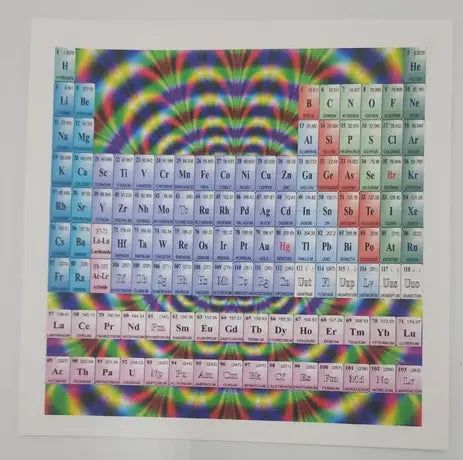
What Makes Blotter Art Collectible?
Blotter art occupies a rare intersection in the collectibles world. It's part fine art print, part counterculture artifact, and part limited-edition multiple — all in a format that's immediately recognizable yet still relatively obscure outside of its dedicated collector base.
The format itself — perforated sheets of absorbent paper, typically printed in small runs by hand or offset press — creates natural scarcity. Most blotter art is produced in editions of a few hundred to a few thousand sheets, and unlike posters or prints, the sheets are physically fragile. Paper yellows. Corners bend. Improper storage causes fading. That means well-preserved examples become rarer with every passing year.
The cultural weight is real, too. Blotter art is directly tied to the history of psychedelic culture, the underground press, festival art, and the broader world of psychedelic visual art. Collectors aren't just buying a piece of paper — they're buying a document of a specific moment in that history.
The Key Factors That Drive Value
Not all blotter art is equal. Here's what separates a piece worth holding from one that's more novelty than investment:
1. The Artist
The single biggest value driver is the artist behind the design. Works by recognized names — artists who have crossed over into gallery representation, limited-edition print culture, or mainstream art world recognition — command significantly higher prices and hold value better over time.
Artists like Killer Acid, Gwyllm Llwydd, Chuck Sperry, Steven Cerio, Joshua Levy, and Dr. Nuse89 have built substantial collector followings across multiple formats. When their work appears on blotter, those pieces carry the weight of the artist's broader market. A piece by a lesser-known or anonymous artist is a different proposition entirely.
If you're buying with appreciation in mind, buy signed editions and buy artists whose work you can research beyond blotter art specifically.
2. Signed and Numbered Editions — The Single Best Investment in Blotter Art
If there's one piece of advice worth internalizing before you spend a dollar on blotter art, it's this: artist-signed and numbered editions are the strongest investment in the category, and it's not close.
Here's why the combination matters so much:
- The artist's signature is direct authentication. It links the piece unambiguously to the artist's hand and eliminates questions of provenance that plague unsigned work. In the event of resale, a signature is worth more than any paper documentation.
- A number tells you exactly where you stand. "47/150" means you hold one of 150 sheets that will ever exist with that image in that edition. There's no ambiguity, no undocumented overruns, no way to flood the market later.
- Together, they create a ceiling on supply. A signed, numbered sheet in near-mint condition from a recognized artist is genuinely scarce — and scarcity is the foundation of any collectible's long-term value.
Artist proofs (APs) — typically numbered separately from the main edition and produced in even smaller quantities — carry an additional premium and are often the first pieces serious collectors pursue.
Unsigned, undocumented, or open-edition blotter art can be visually identical but will almost always lag behind in secondary market value. If you're buying to hold, always prioritize signed and numbered over unsigned, even at a higher entry price.
Browse our current selection of artist-signed blotter art at BlotterArt.io — every piece is vetted for authenticity and documented provenance.
Be cautious of undocumented or unlicensed reproductions, which circulate in this market. Established sources — like BlotterArt.io — vet their inventory and can speak to provenance.
3. Condition
Condition is everything in paper collectibles, and blotter art is no exception. The most common condition issues are:
- Yellowing or foxing from acid in the paper or improper storage
- Fading from UV exposure
- Fold lines, creases, or tears, especially along perforation lines
- Moisture damage, which can cause curling or mold
A sheet in near-mint condition — flat, unfaded, with clean perforations — can be worth multiples of the same sheet in average condition. If you're buying to hold, invest in proper storage: acid-free archival sleeves, away from direct light, at stable temperature and humidity.
4. Cultural and Historical Significance
Certain pieces carry significance beyond their design. Sheets tied to major artists, landmark events, specific communities, or notable figures in psychedelic history carry a premium that goes beyond aesthetics.
The late Mark McCloud — the most celebrated blotter art collector in history, whose collection ran to tens of thousands of sheets — helped establish the cultural legitimacy of the format. Pieces with documented connections to figures or moments in that history have a story that adds value.
5. Licensing and Legitimacy
Unlicensed blotter art — designs produced without the artist's permission — exists in the market and can be difficult to distinguish from legitimate editions. Beyond the ethical issues, unlicensed work carries no provenance and is essentially unsellable through reputable channels.
When you buy from a source like BlotterArt.io, you're buying pieces that are either licensed, produced in collaboration with artists, or vetted for authenticity. That documentation matters if you ever want to resell.
What Blotter Art Isn't (Managing Expectations)
To be clear: blotter art is a niche collectible, not a liquid asset. This is not a market where you can buy today and expect a guaranteed return in 12 months.
What it is: a category where patient collectors who buy well tend to do well. The pieces that have appreciated most reliably are the ones that were hard to get at the time of release — small editions, notable artists, documented provenance — and were properly stored over the years.
It's also worth noting that the primary reason to collect blotter art should be that you love it. The visual quality of the best pieces is genuinely remarkable: intricate, psychedelic, one-of-a-kind imagery on a format that has no real equivalent in the broader art world. If you're buying something you'd be proud to own regardless of what it's worth in five years, you're in the right frame of mind.
Where to Buy Blotter Art
The secondary market for blotter art is fragmented. You'll find pieces on eBay, at art fairs, through private collectors, and on platforms like Whatnot — where live auction shows have introduced the format to a new generation of buyers.
For curated, vetted inventory with documented provenance, BlotterArt.io has been the leading source since 2012. We carry a rotating selection of collectible blotter art for sale, including vintage sheets, artist editions, and limited runs from contemporary artists working in the psychedelic tradition.
If you're ready to start buying — or want to talk through what pieces might be right for your collection — browse our current inventory or get in touch directly
The Bottom Line
Blotter art rewards collectors who do their homework: who understand the artists, care about condition, seek out documented editions, and buy from reputable sources. In those conditions, it's a category with real staying power — and one that most of the broader collectibles world hasn't caught up to yet.
That's often where the best opportunities are.
BlotterArt.io has specialized in collectible and custom blotter art since 2012. Browse our blotter art for sale, shop artist-signed blotter art, learn more in our What Is Blotter Art? guide, or contact us about custom production.